Why Your Brain Feels Safe Only When You’re Checking or Reassuring
February 3, 2026
If you’ve ever thought, “I’ll just check one more time,” or “If someone can just tell me I’m okay, then I’ll relax,” welcome to the club no one asked to join.
Here’s the thing about why your brain feels safe only when you’re checking or reassuring. It doesn’t mean you’re anxious, fragile, or “behind” in recovery. It means your brain learned a shortcut that felt helpful at first and then slowly (and menacingly) took over your life.
I see this pattern every single day. I saw it in my office. In the residential facility. In my DMs. And honestly, in my own head back in the day.
So let’s talk about why this happens, why it traps you, and what actually helps in real life, not just in therapy-land.
(psst: be sure to stay until the end for a massive 40% off sale on some tools that will help you put all of this into practice, so you stop getting hijacked by your own brain mid-day)
Why your brain feels safe only when you’re checking or reassuring
Here’s how it usually starts.
A thought pops up or your body feels weird. Your stomach drops. Your brain hits the alarm button. The urge to check shows up instantly.
You scan your body.
You reread a text.
You replay a conversation.
You Google symptoms.
You ask someone, “Do I sound okay?”
For about ten seconds, everything gets quiet. Your nervous system sighs. Your brain says, “See, we handled it.”
And then the cycle resets.
Because what you actually taught your brain is this. The only way to feel safe is to check.
That is exactly why your brain feels safe only when you’re checking or reassuring. The relief works in the moment, but it feeds the loop long term.
Why “just thinking it through” makes this worse
Most people try to out-think anxiety.
They analyze. They debate. They reason. They try to prove they’re fine.
Meanwhile, anxiety gets louder.
That’s because this isn’t a thinking problem. It’s a habit loop problem. Every extra mental pass tells your brain, “This is dangerous. Stay alert.”
So instead of more thinking, what you need is a way to interrupt the pattern in real time.
When checking stops helping and starts running your life
There’s a tipping point most people don’t notice at first.
Checking feels responsible. Careful. Mature. Even kind.
Then it becomes automatic. Then it becomes mandatory.
You start organizing your day around reassurance.
You avoid situations where you might feel uncertain.
You keep your phone nearby just in case.
You measure success by how calm you felt, not how you showed up.
That’s when your world quietly gets smaller.
This is exactly where simple, real-world tools matter.
What actually helps when the checking urge hits
You don’t need a perfect system. You need something you can use in the moment, in your real life, when your brain is loud.
Here’s what works for my students again and again.
First, name it.
Silently say, “This is the checking urge.”
Second, take one breath.
Not to calm down. Just to create a tiny pause.
Third, choose action over analysis.
Keep driving. Keep showering. Keep cooking. Keep living. Even if your body feels buzzy.
And this is where visual tools make a massive difference. When your brain is screaming, logic goes out the window. Something you can see works faster.

Why my merch is built for this exact moment
Let me walk you through each one so you know exactly how they help.
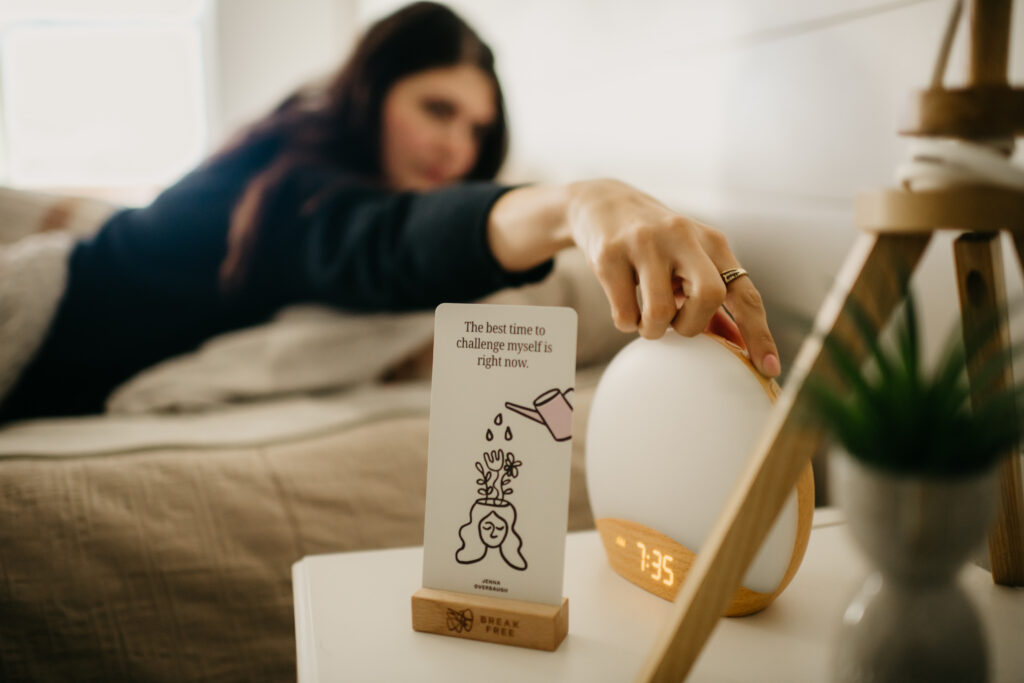
Break Free Affirmation Deck
These are not fluffy quotes. They’re short, grounded, recovery-focused reminders that stop rumination instead of feeding it.
Keep one on your nightstand for bedtime spirals. Keep one on your desk for work anxiety. Keep one in your bag for on-the-go moments.
When the urge to check hits, you see a card that says something like, “My only job is to not answer the scary question.” That shifts you out of the loop in seconds.
You can check them out here.
Break Free Air Fresheners
Your car is prime anxiety territory. You’re alone, your brain has space, and the checking urge loves that.
These hang on your visor as a constant visual anchor. When your brain starts spinning, you glance up and remember, “Oh right, I don’t have to take the bait.”
Simple. Practical. Real life.
Break Free Stickers
These are perfect for your phone, laptop, bathroom mirror, or water bottle.
They catch your eye before your brain runs away with you. Less debating. More redirecting.
Stick one where your spirals usually start.
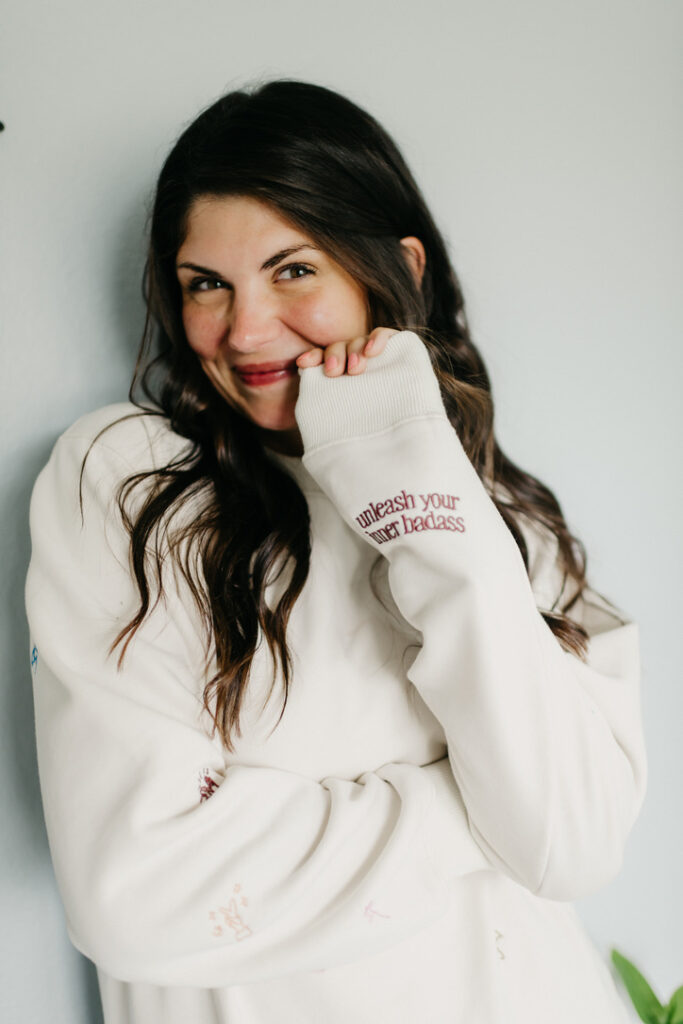
Break Free Sweatshirts
This one is more about identity than technique.
Wearing your recovery out loud is a quiet reminder to yourself that you’re doing things differently now. Plus, cozy sweatshirt energy is exactly what we need when anxiety is loud.
Why I’m bringing all the merch home to Wisconsin
Right now, all of this merch is sitting in a warehouse in Utah.
That is changing.
After this sale, I’m shipping every remaining item to my house in Wisconsin. I want to pack orders myself, write personal notes, and include small tokens of encouragement in each package.
I want your tools to feel like they came from a real person who actually gets it, not a random fulfillment center.
Once everything moves here, I won’t be able to offer discounts like this again for a long time. That’s why this sale matters.
Your early access before the public sale
Since you’re reading this, you get first dibs.
Save 40% on everything in the Break Free Shop – no code needed, it’s already applied at checkout.
This is your last chance at this discount before I bring all the merch home.
The sale ends Friday, February 6 at 11:59 PM CST. No extensions. No exceptions.
You can browse everything here. Click to shop!
Final thought before you go
If your brain feels safe only when you’re checking or reassuring, that doesn’t mean you’re broken. It means your brain learned to crave certainty.
Your job isn’t to eliminate uncertainty. Your job is to stop letting it run the show.
And sometimes, the simplest tools you can see, touch, and carry with you make all the difference.
I’ve got you.
xo,
Jenna


most popular episodes
Love my podcast?
Episode 112: Postpartum OCD and False Memory OCD
Imagine how in depth I can go in an online course. Instantly downloadable and game-changing. Take the next step towards an amazing life.