Reassurance Seeking OCD: Why Asking for Certainty Is Keeping You Stuck
January 13, 2026
(Yes, Even “Self-Reassurance” Counts)
If you’ve ever thought, “I just need someone to tell me I’m okay,” or “Once I get reassurance, I’ll finally be able to move on,” you’re not alone. For people with OCD and anxiety, reassurance seeking feels logical, comforting, and responsible.
Unfortunately… reassurance seeking OCD is one of the biggest reasons people stay stuck.
And I know, I know, that might feel rude to hear. Especially if reassurance is the thing helping you get through the day. So let’s talk about what reassurance seeking actually is, why it backfires, and how to start loosening its grip without white-knuckling your way through anxiety.
What Reassurance Seeking OCD Actually Looks Like
Most people think reassurance seeking means asking someone else for comfort. Sometimes it does. But reassurance seeking OCD is sneakier than that.
It can look like:
- Asking a partner, friend, or therapist, “Do you think this means something?”
- Googling symptoms or scenarios “just to check”
- Mentally telling yourself, “I’ve felt this before and I was fine”
- Replaying a memory to make sure you didn’t mess up
- Checking how you feel to see if you’re calm yet
And yes – even self-reassurance counts.
That’s the part no one warns you about.
If you’re constantly checking, reminding, reviewing, or trying to convince yourself that everything is okay, reassurance seeking OCD is probably running the show.
Why Reassurance Feels So Necessary (and So Hard to Stop)
Here’s why reassurance is so convincing: it works… briefly.
You ask.
You check.
You reassure yourself.
And for a moment, your anxiety dips. Your nervous system goes, “Ahhh. Okay.”
But that relief doesn’t last. And every time you rely on reassurance to feel better, your brain learns a dangerous lesson:
“I can’t handle uncertainty on my own.”
So the next time a thought shows up, anxiety gets louder and more urgent. That’s how reassurance seeking OCD trains your brain to doubt itself more, not less.
This is exactly how the OCD and anxiety cycle keeps looping. (If you want to see that cycle laid out clearly, this breakdown helps a lot. Just click here to learn more.)
How Reassurance Cancels Out Your Progress
This part is important, especially if you’re doing therapy or ERP.
You can resist physical compulsions.
You can sit with discomfort.
You can tell yourself you’re “doing the work.”
But if you’re still seeking reassurance – from others or from yourself – you’re quietly reinforcing the fear.
Think of it like this: every time you ask for reassurance, you’re telling your brain, “This thought is dangerous and must be handled.” That message sticks.
That’s why reassurance doesn’t bring freedom. It brings short-term relief and long-term anxiety.
Reassurance vs. Support (They’re Not the Same Thing)
This is where a lot of people get confused.
Support sounds like:
- “I’m here with you.”
- “You don’t have to go through this alone.”
- “You can handle uncomfortable feelings.”
Reassurance sounds like:
- “You’re definitely fine.”
- “That won’t happen.”
- “This doesn’t mean anything.”
- “I promise you’re okay.”
Support builds capacity.
Reassurance replaces it.
If you’re trying to reduce reassurance seeking OCD, this distinction matters.. a lot.
What to Do Instead of Reassurance (Without Spiraling)
When the urge for reassurance hits, your job isn’t to fight it perfectly. It’s to hold the line just long enough for your brain to learn something new.
Here’s a simple shift that helps many of my students:
Instead of asking, “Can I get certainty?”
Try saying, “I can tolerate not knowing.”
Not because it feels good, but because it builds trust.
This is the core of learning how to respond differently to OCD urges. If holding the line feels nearly impossible, this resource walks you through exactly how to do it in real time. Click here for my Hold The Line Masterclass (a crowd fave!).
A Gentle Warning: Don’t Turn This Into a New Rule
This is your tough love reminder from moi.
- Don’t obsess over whether you’re seeking reassurance “too much”
- Don’t shame yourself when you slip
- Don’t replace reassurance with intense self-monitoring
Progress here is messy. That’s normal.
The goal isn’t zero reassurance.
The goal is less urgency and more willingness.
Why Physical Reminders Help When Reassurance Urges Hit
When anxiety spikes, logic often goes offline. That’s why arguing with your thoughts rarely works.
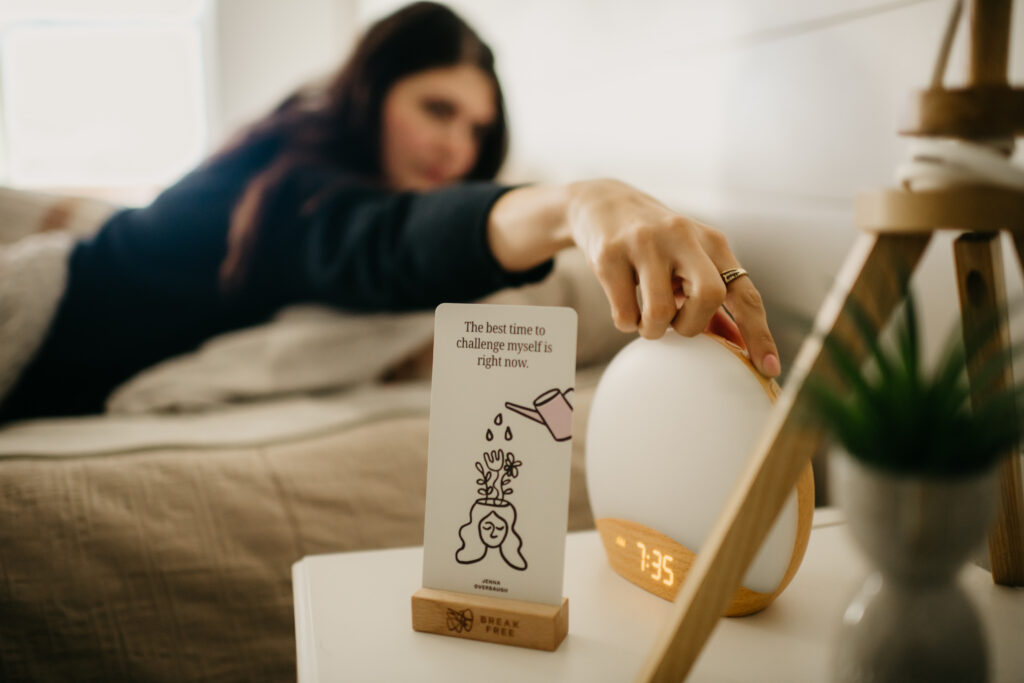
Visual reminders, like a short phrase on a sticker, a card on your desk, a sweatshirt that says exactly what you need, can interrupt the reassurance loop before it takes off.
Not to calm you down.
To remind you who’s in charge.

If You’re Ready to Stop Feeding the Cycle
If reassurance seeking OCD has been your safety net, letting go can feel terrifying. That doesn’t mean you’re doing it wrong. It means you’re doing something brave.
If you want a step-by-step framework for breaking reassurance patterns, resisting mental compulsions, and rebuilding trust in yourself, this is where I want you next – The OCD and Anxiety Recovery Blueprint.
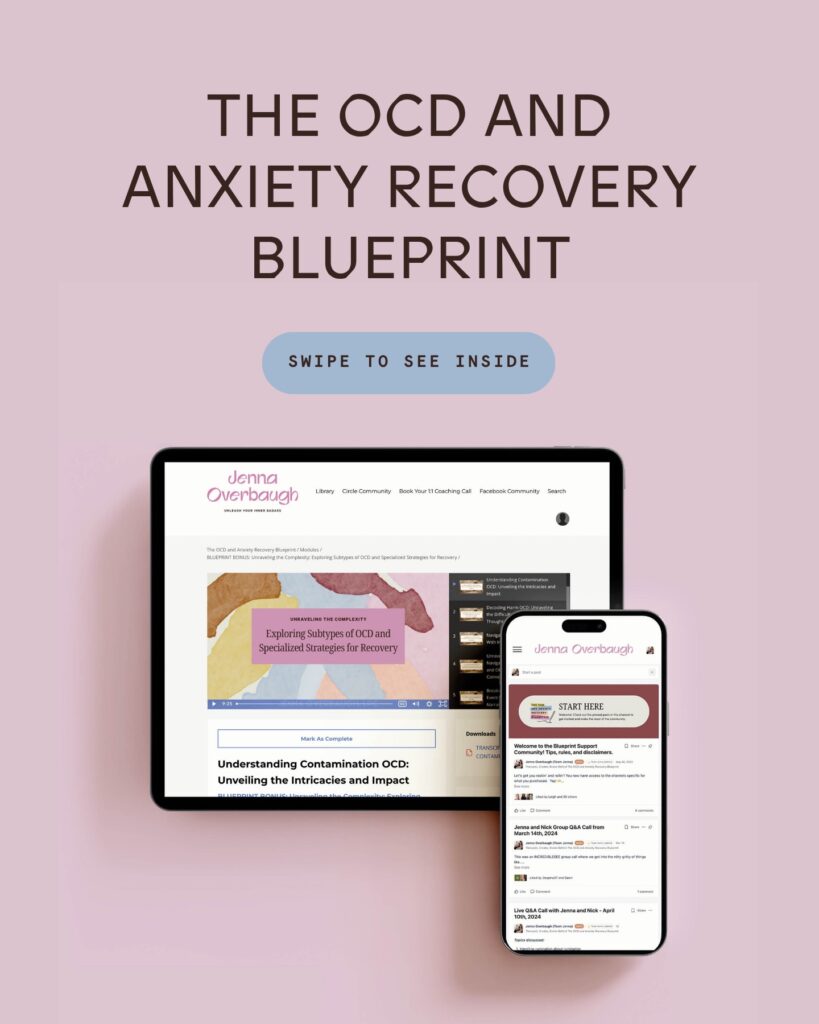
Inside, we don’t just talk about reassurance – we dismantle the entire cycle that keeps it necessary in the first place, so you don’t even need to doubt yourself in the first place let alone ask 15 of your closest friends what they think.
Final Thought
If reassurance has been the thing getting you through, you’re not weak. You’re human. But you don’t have to live at the mercy of your anxiety forever.
You can learn to sit with uncertainty.
You can learn to trust yourself again.
And you can learn to move forward, even when your brain begs for certainty.
That’s real freedom.




most popular episodes
Love my podcast?
Episode 112: Postpartum OCD and False Memory OCD
Imagine how in depth I can go in an online course. Instantly downloadable and game-changing. Take the next step towards an amazing life.