Your OCD Isn’t Different: Why Focusing on Subtypes Keeps You Stuck
October 28, 2025
I can’t tell you how many messages I get that sound like this:
- “I know ERP helps with handwashing OCD, but my intrusive thoughts are existential… so maybe it doesn’t apply to me.”
- “I’ve tried the strategies, but my OCD is about relationships, and it feels so different.”
- “What if my OCD doesn’t fit the categories? Maybe that means I can’t recover.”
Sound familiar?
This is one of the biggest traps I see people fall into: believing that because your OCD looks a certain way, the strategies won’t work for you. That your OCD is special, unique, or somehow untreatable.
Here’s the hard truth: OCD is OCD. When it comes to OCD recovery, the content may change, but the cycle is the same. And if you stay focused on subtypes, you’ll stay stuck.

Why We Obsess Over Subtypes
When your brain throws intrusive thoughts at you, it feels personal. Maybe your OCD centers on harm, health, sex, morality, or relationships. Naturally, you start to believe that your exact theme is the problem.
But here’s the deal: OCD isn’t about the content. It’s about your intolerance of uncertainty and your compulsive responses to that doubt.
Focusing on subtypes is like playing whack-a-mole. You smash down one obsession, only for another to pop up. And the cycle continues.
👉 Want a clear look at this cycle? Watch my OCD & Anxiety Cycle Masterclass. It lays out exactly why you’re stuck and how to finally break free.
The Consequences of Staying Stuck in “My OCD is Different”
Believing your OCD is special might feel protective, but here’s what it actually does:
- Keeps you chasing content instead of tackling the real problem.
- Makes you feel hopeless when a new obsession shows up.
- Delays real recovery because you’re stuck researching, labeling, and analyzing.
- Fuels the reassurance-seeking loop: “Does this subtype count as OCD?”
The longer you believe your OCD is “different,” the longer OCD gets to run your life.

My Approach: Forget Subtypes, Focus on the Process
Traditional therapy often spends too much time labeling, categorizing, and validating content. That’s not recovery.
My approach, and what I teach inside the Blueprint, is to zoom out. OCD is always about:
- An intrusive thought, image, or feeling.
- The doubt and uncertainty it brings.
- The compulsion (mental or physical) to try to feel certain again.
That’s it. Rinse and repeat. Once you learn to target the cycle itself, the subtype doesn’t matter.
What’s Possible When You Stop Chasing Subtypes
Imagine this:
- You get a new intrusive thought, and instead of spiraling, you recognize the cycle instantly.
- You stop needing to research or ask for reassurance because you already know the formula.
- You feel capable, even when OCD throws a curveball, because you’ve trained yourself to handle the process, not the content.
This is what real recovery looks like. Not a life without intrusive thoughts, but a life where intrusive thoughts don’t run the show.
Grounding Tools to Keep You Steady
Recovery isn’t just mental—it’s also about the environment you create. Surrounding yourself with grounding reminders helps reinforce the work.
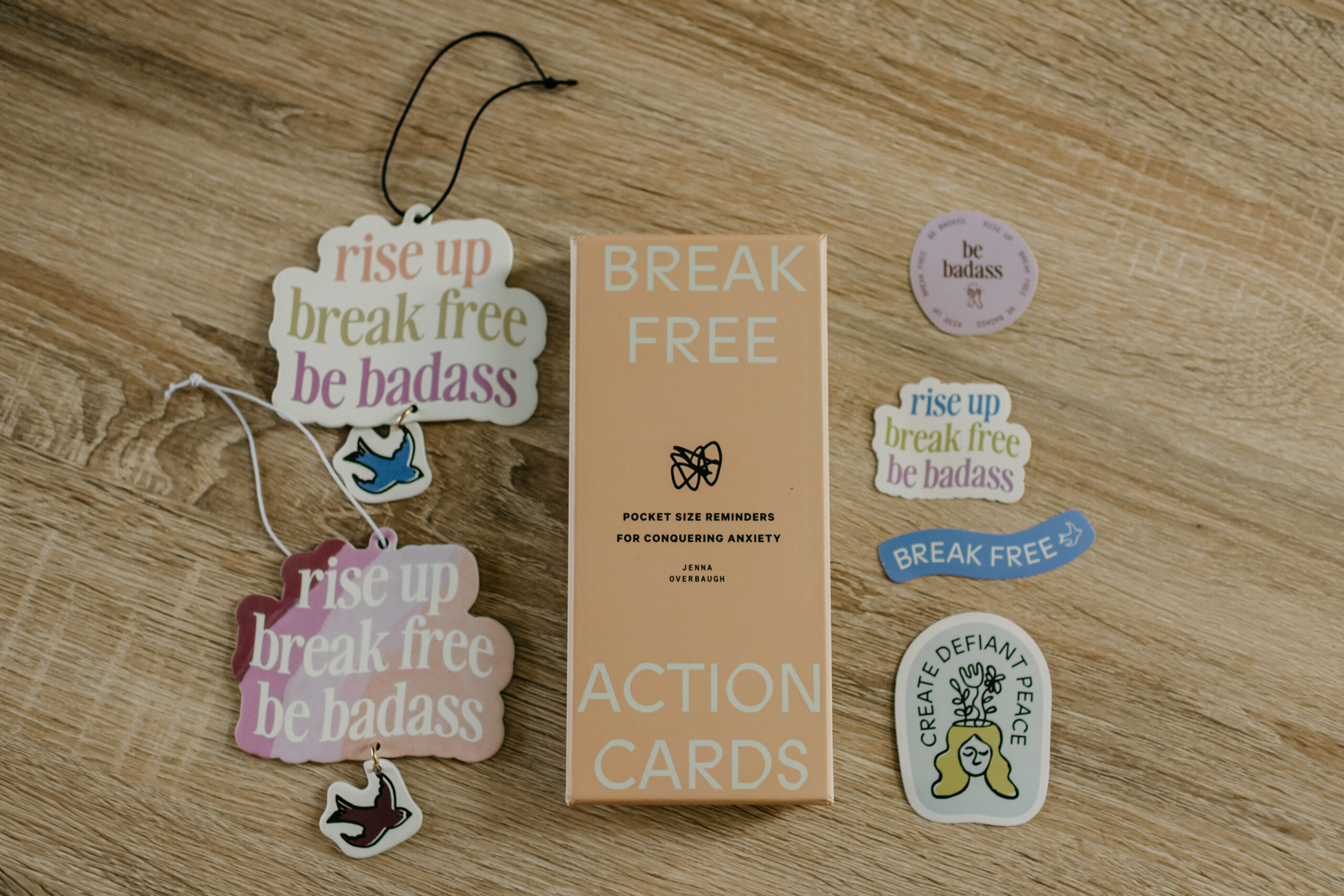
That’s why I created the Break Free Shop. Affirmation decks, stickers, and air fresheners that aren’t just “cute.” They’re designed as visual anchors to keep you steady when OCD tries to pull you back in.
Ready to Stop Playing Subtype Whack-a-Mole?
If you’re tired of wondering whether your OCD is different or untreatable, it’s time to zoom out and finally break the cycle.
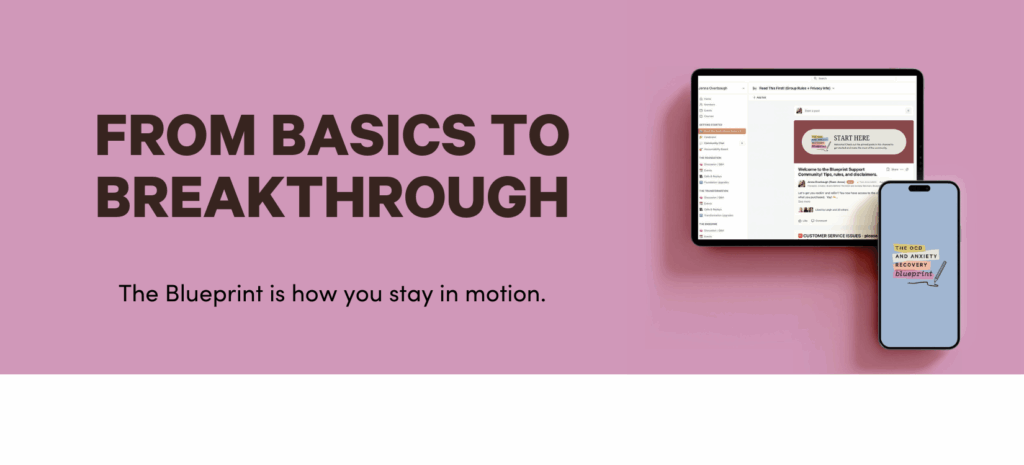
That’s exactly what I’ll help you do inside the OCD & Anxiety Recovery Blueprint.
The Blueprint is your all-in-one system for OCD recovery:
- Clear, step-by-step tools that work no matter your OCD theme.
- A framework you can return to anytime OCD tries to trick you.
- Community support and live Q&As with me every week so you never feel alone in the process.
👉 Click here to join the Blueprint.
Because your OCD isn’t different. It’s OCD. And that means recovery is possible.




most popular episodes
Love my podcast?
Episode 112: Postpartum OCD and False Memory OCD
Imagine how in depth I can go in an online course. Instantly downloadable and game-changing. Take the next step towards an amazing life.