Anxiety After Drinking: Why St. Patrick’s Day Can Spike OCD and Intrusive Thoughts
March 17, 2026
Every year around St. Patrick’s Day, my DMs get very predictable.
“Why is my anxiety so bad after drinking?”
“Why do I feel guilty the day after going out?”
“Why am I replaying everything I said last night?”
“Did I ruin something? Did I embarrass myself? Did I cross a line?”
If you have OCD or anxiety, alcohol hits differently. And if you’ve ever Googled “anxiety after drinking” or “hangxiety OCD,” you already know what I’m talking about.
The night might have been fun. Or fine. Or just normal.
The next day feels like a courtroom.
Why Anxiety After Drinking Feels So Intense
Alcohol lowers inhibition. It also disrupts sleep, affects your nervous system, and changes your brain chemistry for a day or two. That alone can make anxiety louder.
But when you add OCD into the mix, something else happens.
You wake up slightly foggy. Your body feels off. Your brain scans for problems.
Then it finds one.
A half-memory of a conversation.
A joke you’re not sure landed.
A text you sent that now feels questionable.
And your mind grabs onto it.
You start replaying the night. You analyze tone. You try to reconstruct facial expressions. You zoom in on tiny details and attempt to determine whether you “did something wrong.”
It feels responsible. It feels like you’re reviewing the tape to make sure everything is okay.
Except it rarely ends with “everything is okay.”
It ends with more doubt.
The Rumination Spiral the Morning After
For people with anxiety, St. Patrick’s Day is not just about drinking. It’s about what happens after.
You might wake up and immediately start analyzing:
- Did I overshare?
- Did I flirt inappropriately?
- Did I act annoying?
- Did I say something morally wrong?
- Did I secretly reveal something terrible about myself?
And then you go hunting for reassurance.
You text a friend casually asking, “Was I weird last night?”
You scroll social media looking for clues.
You reread old messages.
You replay conversations in your head like you’re studying for an exam.
This is where anxiety after drinking turns into a mental compulsion loop.
You are not just reflecting. You are trying to reduce discomfort.
Why OCD Grabs Onto “Imperfect” Nights
OCD does not need something catastrophic. It needs ambiguity.
Alcohol creates ambiguity.
You may not remember every detail clearly. Your brain fills in gaps with worst-case interpretations. It tells you that because you cannot recall everything perfectly, something must be wrong.
That uncertainty becomes the hook.
So you try to solve it.
You think harder.
You replay more.
You try to land on a conclusion that feels clean and final.
And your brain refuses to give you one.
That is the exhausting part.
The Guilt That Isn’t Actually Guilt
A lot of people describe the next-day feeling as guilt. Sometimes it is. Often, it’s anxiety wearing a moral costume.
Your nervous system is dysregulated. Your sleep was disrupted. Your brain chemistry is off. You feel unsettled.
Instead of labeling it as physical anxiety, your mind looks for a narrative. It lands on “I must have done something wrong.”
That narrative feels convincing.
Once you understand the mechanics, you stop assuming that every uncomfortable feeling means you messed up.
What To Do When Hangxiety Hits
First, normalize the physiological piece. Alcohol disrupts your nervous system. You will feel more sensitive the next day. That does not mean your fears are accurate.
Second, catch the mental compulsion early. Notice when reflection turns into interrogation.
There is a difference between briefly thinking, “I hope I didn’t overshare,” and spending two hours replaying one sentence.
When you notice yourself entering the loop, practice stepping out before you finish it. That will feel uncomfortable. Your brain will insist you need resolution.
You do not.
This is where holding the line matters. Not aggressively. Not perfectly. Just consistently.
Because the goal is not to become someone who never reflects. The goal is to stop treating every imperfect memory like a moral emergency.
A Word About Drinking and Boundaries
This is not a lecture about alcohol. Some people decide drinking does not work well for their anxiety and adjust accordingly. Some people choose to drink occasionally and manage the aftermath differently.
What matters is awareness.
If you know that anxiety after drinking tends to spike your OCD, plan for that. Expect it. Anticipate the mental noise the next day. Have scripts ready. Put a reminder on your mirror. Use a grounding tool that pulls you back to the present instead of back into the replay.
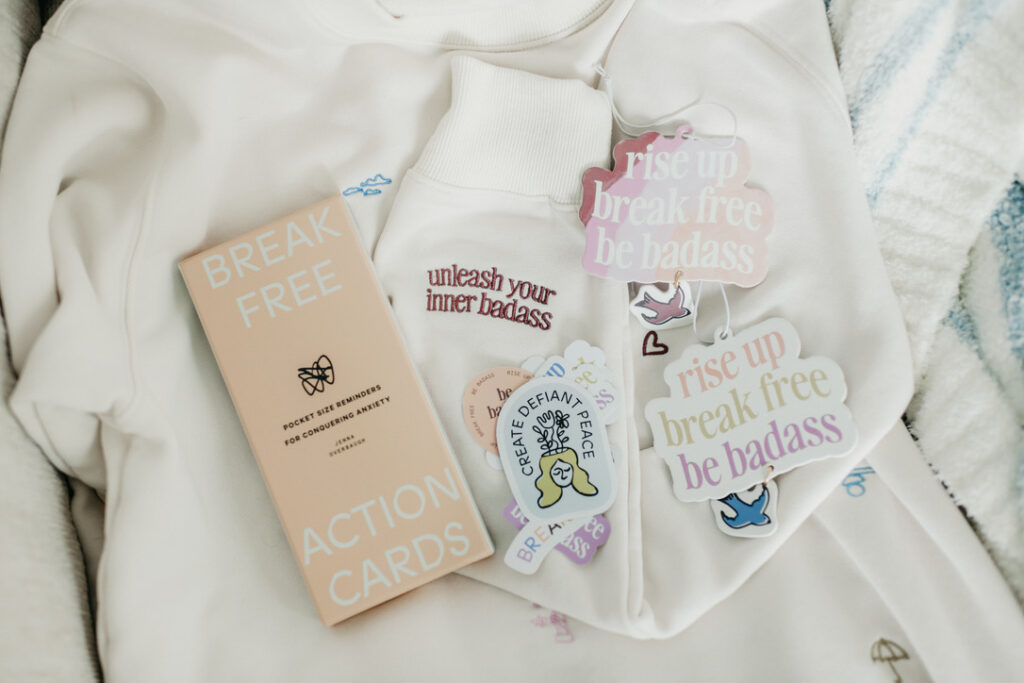
Sometimes the smallest visual cue interrupts the biggest spiral.
Final Thought Before You Panic About Saturday
If your anxiety spikes after St. Patrick’s Day, that does not mean you are reckless, immoral, or secretly awful.
It means your nervous system is sensitive.
It means your brain hates ambiguity.
It means OCD is doing what OCD does.
You can feel uncomfortable without solving the discomfort.
That skill takes practice.
And if you find yourself stuck in rumination loops long after the holiday passes, there are tools and structures that go way beyond white-knuckling it.
You don’t have to spend every night like this mentally auditing yourself.



most popular episodes
Love my podcast?
Episode 112: Postpartum OCD and False Memory OCD
Imagine how in depth I can go in an online course. Instantly downloadable and game-changing. Take the next step towards an amazing life.